

Table of Contents
Four Pillars of Trading
Once a trader has discovered a profitable approach to trading that suits their personality, their journey does not end there.
In fact, that is where the true trader’s journey begins.
There are four important pillars to trading that every successful trader understands and respects, no matter what their trading style is.
- The first pillar is risk management. All successful traders know how to manage their risk optimally to suit their style or strategy. Even discretionary traders who do not rely on systematic rules know to manage their risk properly, or they risk blowing up at any time.
- The second pillar is edge, which I have already discussed in a previous article. Risk management and edge go together, as bad risk management can ruin your edge, and having no edge means your risk management is futile.
- The third pillar is discipline, or trading psychology, which I have also discussed before. Without discipline and self-awareness, a trader cannot hope to execute their edge properly. And if a trader is not executing their edge properly, then they are not going to be successful in the long term.
But the final pillar – and the focus of today’s article – is consistency.
If You Can’t Measure It…
…You can’t improve it.
Even once a trader has thoroughly understood and implemented sound risk management, developed their edge, honed their performance and self-discipline, and found their feet in the markets, they must then focus heavily on consistency of execution.
There is a very logical reason for why consistency is such a large part of every successful trader’s process. As the title above says – if you don’t measure something, then you can’t possibly hope to improve it.
Not only do markets change and evolve over time, making their patterns and behaviours morph, but so do human beings. We must adapt to changing conditions in all areas of life. But how do you know when change is necessary, or if your system is just experiencing a very natural drawdown?
This is achieved first through consistency of action, and then through self-analysis – which requires good record-keeping (ie. a detailed trading journal).
Once you have a large enough sample size of live trades, you can then reflect on your results and identify patterns in your trading that lead to undesired – or perhaps more importantly – desired outcomes.
Stages of Competence
As we learn and develop a new and complex skill such as trading, we go through several phases.
- Unconscious Incompetence (we don’t know that we don’t know).
- Conscious Incompetence (we know that we don’t know some things).
- Conscious Competence (we know what we need to do).
- Unconscious Competence (we do what we need to do without thinking about it).
We should all be striving for unconscious competence as traders.

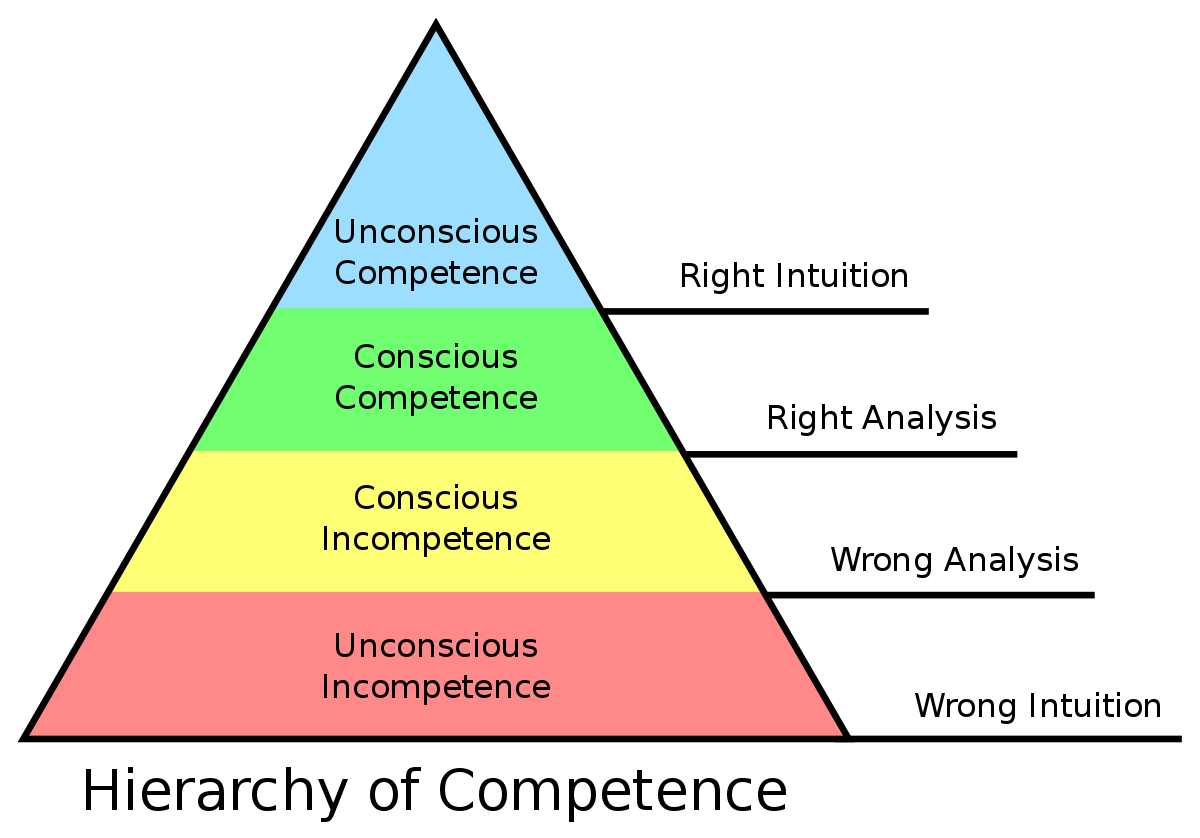
A successful trader will always fall within the top two categories: either conscious competence, or unconscious competence, depending on how many years of experience they have.
As we pass through the conscious competence stage (ie. we know what we are doing, but we need to focus in order to do it right), we enter a period of learning which is similar to muscle-building.
Only through consistent repetition can we form the right habits that will lead to the outcome we desire. Without this deliberate practice we tend to stay within the conscious incompetence stage.
This is usually reflected in our trading as “system hopping” or general self-sabotage (entering trades we shouldn’t, exiting too early, etc.).
Once we escape this cycle of despair and wrap our minds around what we really need to do in order to be successful, then to graduate from the conscious competence stage we need to develop serious confidence in what we are doing.
And the best way to do that is to measure what you are doing in a scientific manner, collecting as many detailed statistics about your trading process as possible.
The Importance of Consistency
As I mentioned several times already, if you want to improve something, then you must quantitatively and qualitatively analyse it first to determine what specifically needs improving.
And the only sure way to analyze what you are doing in an effective manner is to make sure that you do the same thing under the same circumstances every time, with as few deviations as possible, so that your data is consistent and you have a framework of known variables to work within.
In other words, whenever you see a setup that meets your rules, you must execute on it in exactly the same way as you always do. Obviously not all trading opportunities will be the same, but your process should be.
Your stop loss placement should be consistent. For example, if you set it above previous highs for shorts, then use an objective method to determine the price to place it at (eg. some ATR distance from the high). Your exit reasons should also be consistent. For example, if you plan to exit on a trailing stop or by scaling out, then do not close your trade at market on the first sign of trouble or set a limit order at a price you like the look of.
The time to decide on these types of key factors is before you begin trading your system with live money. You should have addressed all these kinds of variables before beginning your testing and development process (or at least during it).
Once you have a system in place that you have studied and tested and found to be viable, then your only job as a trader is to execute that system in the live markets as closely as possible to how you designed and tested it.
If you are a trend-following trader, then there should never be a day that you find yourself in a counter-trend position, unless you have changed your trading plan to allow for such trades. Even if you are a discretionary trader, then you still ought to have rules in place that dictate what opportunities you can and cannot act on, and how you specifically plan to take advantage of them – all in advance.
If you do not have these types of rules in place before you trade, then your actions will be inconsistent. And inconsistent actions lead to inconsistent results, and inconsistent results are useless from a statistical analysis perspective.
In the computer programming world, this is known as “garbage in, garbage out”. Even a computer – which is one of the most consistent machines on Earth – will not perform its job well if it is given bad data to act on.
How To Develop Trading Consistency
Now that you understand why consistency plays a vital role in trading success, I should probably share a few tips on how to develop it.
I am by no means an expert on the subject, and I struggle with it myself like all traders do. But I have made phenomenal progress from how I used to be, and I can share what worked for me.
The first thing you should do is set up a trading journal. Not just a pen and paper one, but a sophisticated spreadsheet that keeps all of your trading statistics. There are a number of services and software out there that can help you do this, such as Edgewonk, TraderVue and Myfxbook.
But to be honest, I find it to be far more effective to manage your own records manually. It is monotonous, I won’t lie, but it also helps drill consistency into your process.
Every time I place a trade, I enter the information into a Google spreadsheet. I do this for every single trade I take, without fail. There are no exceptions.
This actually helped me to cut back on taking trades I shouldn’t be in when I first began doing it, because the sheer work of tracking the data for every whimsical trade I took was such a pain in the ass that I began to only take high-quality trades that I thought were truly worth the trouble.
Some of the information I like to keep track of is:
- The asset I am trading
- The reason for entry
- The direction of the trade
- The date and time of the trade
- My stop loss size
- My initial target
- My secondary trailing stop target
- My risk per position as a % of my total capital
- Notes (emotional feelings and thought process at the time)
- Screenshots of the charts (before and after)
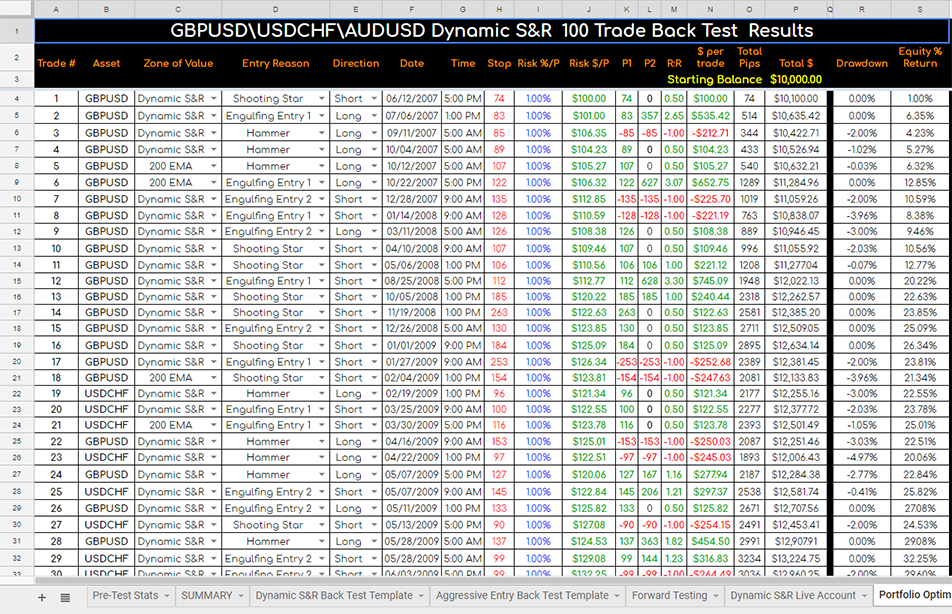
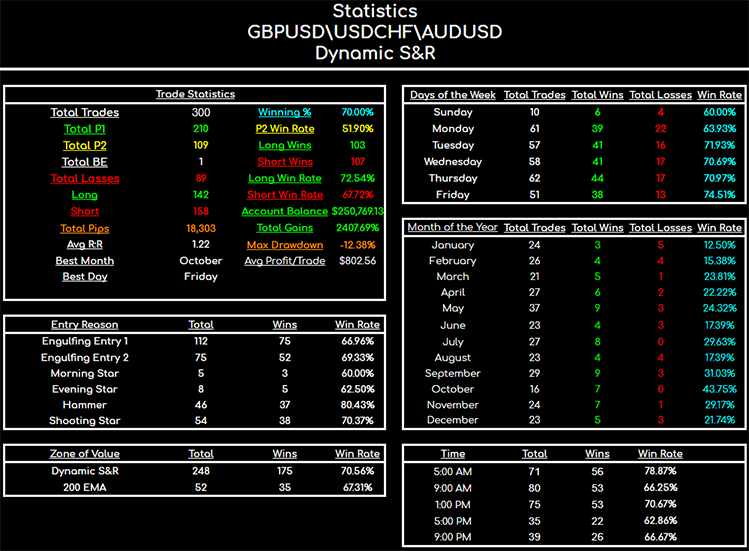
From this information I can determine what is working for me and what is not. After several dozen trades, I can see how my live results differ from my testing results. I can analyze my win rate for days of the week, longs and shorts, currency pair and even use this data to optimize my portfolios (identify and remove under-performers).
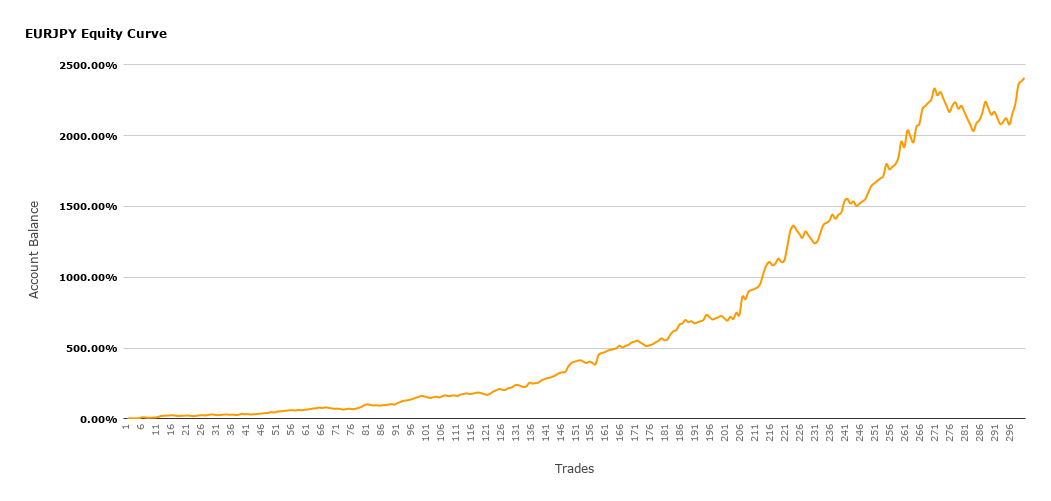
Here are some screenshots of what a good spreadsheet might look like. This is not my spreadsheet – my spreadsheet is much uglier and rudimentary as I am not an Excel wizard, but my friend and closest trading buddy Pascal is.
This is his spreadsheet for both testing and live records:



Conclusion
Consistency is a habit that must be formed. It requires repetition and deliberate practice to master. It is not something you just decide to do, and it is not something that can be learned. It is something you develop over time from personal experience, like discipline and confidence.
You know best what will work for you, so I won’t give you too many other tips. But some things to think about are:
- Your morning routine (breakfast, meditation, exercise, etc.)
- Your morning top-down analysis (how you prepare your charts each day)
- Your analysis throughout the day if you are a day-trader (how you read intraday price action)
- Your post-win routine (what do you do after a good trade or a good streak?)
- Your post-loss routine (what do you do after a rough week or a prolonged drawdown?)
- The markets you trade (don’t trade markets you haven’t planned to)
- How often you check your charts and at what time of day (adapt your strategy to suit your schedule)
- Your pre-bed routine (what do you do with your positions before you go to sleep?)
- Your quiet-period routine (what do you do when Wall Street is on holiday and markets are slow?)
- How you draw key levels on your charts (are you drawing trendlines and S&R consistently?)
- What indicators you use (don’t use indicators you didn’t test)
- How frequently you analyze your trading results (daily, weekly, monthly, quarterly, yearly?)
- Your education (even after you become profitable, do you still spend time learning and improving?)
Everything should be consistent in your process. Even your analysis needs to be consistent. You can’t define a trend a certain way one week, and then define it an entirely different way another week – especially if your trading plan depends on market conditions for entry reasons (as it should).
The way you identify what these market conditions are needs to be consistent. What do you need to see before you decide a market is in consolidation? What do you need to see before you decide a market is trending? What do you need to see before you decide a market is breaking out?
Once you answer these questions, all you need to do is write them out and do your best to remember them every day. You won’t be consistent every day right off the bat, but stick at it for a few months and you will be surprised at the progress you can make.
My trading improved by leaps and bounds once I began taking consistency seriously. I went from being a consistent loser to having four consecutive profitable months in a row, and I have never looked back since then.
Do yourself a favor and stop searching for the perfect system and begin employing what you know properly first. There is no secret method to trading success. Only you know how to achieve your version of trading success, and it all begins with consistency. Without consistency, you will tread water forever.
Be consistent both in your execution and post-execution analysis, and you have a strong chance of making it into the minority of successful traders.

